
ON DECK
- Trump will put tariffs on countries selling oil to Cuba
- Trump threatens 100% tariff on Canada over China deal, 50% tariff on aircraft over lack of Gulfstream certification
- U.S., Mexico set stage for USMCA talks
- Trump threatens to increase tariffs on South Korea after bill to implement deal stalls in parliament
- U.S. inks agreement on reciprocal trade with El Salvador…
- …and Guatemala
- European Parliament will think about thinking about voting on trade deal as soon as they have a little more time to think it over
- Greer says India has ways to go on Russian oil purchases; Malaysia to study U.S. deal; Panama Supreme Court annuls contract for Hong Kong company at Panama Canal ports
DISCLAIMER: The below is intended to inform, not to be construed as an official statement from the office of Rep. Yakym
Tidbits
IEEPA Keep-a Comin’ and Me Wanna Go Home
We have a few more tariff threats to get into this week (yay). We’ll start with one that actually came with paper. This Executive Order (text here, fact sheet here) would set up a “process to impose tariffs on goods from countries that sell or otherwise provide oil to Cuba.”
The authority to impose tariffs under this regime began at 12:01am Eastern today. There were no initial tariffs in the Order and, as of writing, no tariffs have been announced.
Tariffs may be imposed on a country that “directly or indirectly sells or otherwise provides any oil to Cuba,” as determined by the Secretary of Commerce, in consultation with the Secretary of State. If a determination is made, an inter-agency group of Commerce, State, Treasury, Homeland Security, and USTR will determine a rate and product universe. The Order leaves room to modify the tariffs, including if the country retaliates.
Mexico appears to be the country most implicated by this order and has said it will continue its shipments, with President Claudia Sheinbaum describing them as “humanitarian aid.”
Think Ottawana-wana, Speak Ottawana-wana, Live Ottawana-wana, UGH!
It’s been a week on the Canada front.
Back when Canada and China made the EV-for-canola trade, I said, “We probably need to keep a closer-than-normal eye on Truth Social.” But when asked about it, President Donald Trump initially did the unexpected, calling it a “good thing,” though others in the Administration were less bullish (including most recently Treasury Secretary Scott Bessent, who called the move an “about-face”). And so it was that on Saturday, President Trump did the expected, truthing that Canada better not be a “Drop Off Port” for China and threatening a 100% tariff “if Canada makes a deal with China.”
Prime Minister Mark Carney called the threat “positioning” as part of the USMCA review and said he would “never” do a full-on trade deal with China. Others in his administration echoed
that sentiment. Canada-U.S. Trade Minister Dominic LeBlanc spoke with USTR Jamieson Greer on Sunday and said (unclear if this was within the confines of that conversation or not) that Trump Administration officials acknowledged that this is a “narrow” arrangement that shouldn’t jeopardize USMCA. Seems like this particular threat comes down to the definition of “deal.”
Fast forward to last night, when President Trump truthed another threat. This time, it was to decertify Bombardier Global Express planes, plus “all Aircraft made in Canada,” and impose a 50% tariff on Canadian aircraft sold into the U.S. if Canada doesn’t certify Gulfstream 500, 600, 700, and 800 planes.
I was admittedly unfamiliar with the issue, but apparently it is a thing, with the Gulfstream planes getting FAA and European approval, but not Canadian. The linked article notes some practical questions about if the President has the authority to decertify as well. Further clouding that latter aspect, a White House official said decertification would only apply to new planes, not those already in service. Industry Minister Melanie Joly said the Gulfstream certification process is “well underway,” while Bombardier said it’s been in contact with the Canadian government.
I was about to hit send on this week’s edition and checked on the calendar really quickly to make sure everything was in proper order. It could be a coincidence, but I noticed that the Section 232 report on commercial aircraft was due to the President on Monday. Again, could be nothing, could be something, so I’m noting it.
Taking a step back to look at broader U.S.-Canada dynamics and…yeah. Apparently President Trump and PM Carney spoke on Monday, with most headlines out of that conversation focusing on whether or not PM Carney walked back remarks he made in Davos. President Trump also made a few more truths taking shots at Canada and/or its deal with China. The Financial Times reported that Trump Administration officials met with the Alberta Prosperity Project, which is pushing independence from Canada. The White House and State Department gave similar statements that officials routinely meet with “civil society groups” and “no commitments were made.” PM Carney said the U.S. should leave that issue be. But hey at least PM Carney praised the Fed pick.
[Covers Eyes, Peeks Between Slit of Fingers] The M’s Ok, Though, Right?
We’ll hold off on the final tariff threat of the week in order to stay on the topic of USMCA and check in south of the border. Thankfully, it’s less turbulent. But not unturbulent.
President Donald Trump truthed that he and President Claudia Sheinbaum had a “very productive telephone conversation” yesterday. The primary topics of conversation were the border, drug trafficking, and trade. President Sheinbaum on X described the conversation (with the help of Google translate) as “productive and cordial.”
Economy Secretary Marcelo Ebrard was in DC this week (no word on if his motorcade included a snowplow). On Wednesday, he met with USTR Jamieson Greer. Per the USTR readout, the two sides “agreed to begin formal discussions on possible structural and strategic reforms in the context of the first USMCA Joint Review, including stronger rules of origin for key industrial goods, enhanced collaboration on critical minerals, and increased external trade policy alignment.” USTR didn’t respond to Reuters questions on timing of these consultations, or on the coordination/involvement of Canada. But in the past USTR Greer has talked of separate negotiations with each.
Secretary Ebrard posted a video in which he said (with the help of fragments of a few years of Spanish classes since there’s no transcript to copy and paste) he had a “good conversation” on the future of USMCA, with a desire to move “as quickly as possible.” He noted discussions on tariffs, Section 232, the evolution of the automotive industry, U.S.-Mexico imports and exports, critical minerals, and supply chain security. He also met Commerce Secretary Howard Lutnick during the visit.
But like I said, things are merely less turbulent than the neighbors to the north. There’s that whole thing about potential tariffs for selling oil to Cuba. And, as there always seems to be, there are other things that complicate relations. Like the oopsie disclosure of FBI involvement in nabbing drug traffickers, which created a domestic headache for President Sheinbaum.
Han-koo Not Solo in Latest DC Trip
Ok back to that final tariff threat. President Donald Trump truthed on Monday that he would raise the IEEPA reciprocal tariffs and the Section 232 auto, lumber, and pharma tariffs from their 15% rate to 25%. The reason is that “we have acted swiftly to reduce our TARIFFS in line with the Transaction agreed to” but “South Korea’s Legislature is not living up to its Deal.” He noted that the two sides reached a deal on July 30 and reaffirmed the terms on October 29, yet South Korea’s legislature hasn’t approved it.
It seems like there are a couple of threads of tension that are probably worth walking through before going further. Let’s start with the truth. The U.S.-EU Framework included a commitment by the U.S. to lower tariffs “when the European Union formally introduces the necessary legislative proposal to enact the tariff reductions set forth” in the Framework. I leafed through the announcements on South Korea and couldn’t find something similar, even though I swear there was. Contemporary press accounts linked the two together. It’s possible it was more of a verbal thing. Regardless, there was a commitment to cut tariffs upon introduction of a bill, with the expectation that said bill would become law. The bill was introduced, the tariffs were cut, but the bill has (at least in the U.S.’ opinion) languished.
It’s worth flagging that local media suggest that the U.S. sent a formal letter two weeks ago “urging Korea to implement follow-up measures to a bilateral trade agreement.” The article characterizes a “two-week silence” from South Korea. A Trade Ministry official said they had confirmed receipt but would not elaborate further on the response. I think that about covers this aspect of this particular potential predicate offense.
But there are some other tensions to note as well. There was a report ten days ago that South Korea may not invest $20 billion in the U.S. this year, which the South Koreans had to bat down. And then there have been the myriad digital pressures. USTR canceled a joint meeting at the end of last year due to various tech regulatory bills, which have also drawn threat of a Section 301 investigation.
There is also a wide-ranging set of investigations targeting e-commerce giant Coupang that includes at least data breach, corruption, antitrust, and tax dynamics. The company has a Korean-American founder. South Korean Foreign Minister Cho Hyun insisted it’s not connected to the tariff threat, and Trade Minister Yeo Han-koo in fact has said South Korea wants it separated from trade. But the U.S. doesn’t seem content to let that be. Vice President JD Vance warned South Korean Prime Minister Kim Min-seok last week against penalizing U.S. tech companies, including Coupang. Members ofCongress seem to support the linkage too.
Ok. All that being dispensed with, where are things going from here? South Korea said it would respond in a “calm manner.” President Trump told reporters, “We’ll work something out.” Trade Minister Han and Industry Minister Kim Jung-kwan will travel to DC to talk things over with USTR Jamieson Greer and Commerce Secretary Howard Lutnick. And, importantly for the truth predicate, the ruling party said it would launch deliberations on the investment bill as soon as next month.
The High Today in San Salvador Is 30°, Which Sounds Cold Until You Realize That’s Celsius (87°F for Those Wondering) (Because Fahrenheit is Superior in Conveying Actual Temperature)
Yesterday, USTR announced an Agreement on Reciprocal Trade with El Salvador. This was inked pursuant to a Framework that was announced back in mid-November. The agreement runs 159 pages, and amidst everything else going on, I ain’t reading all that. Or at least not in detail. Doing a quick scan, I see some things on digital services taxes, export control coordination, and other features of past agreements. Otherwise, I’m going to generally assume it tracks with the terms laid out in the Framework/Fact Sheet.
The High Today in Guatemala City Is 25°, Which Sounds Cold Until You Realize That’s Celsius (78°F for Those Wondering) (Because Fahrenheit is Superior in Conveying Actual Temperature)
I was too lazy to think of some other headline, but USTR announced an Agreement on Reciprocal Trade with Guatemala today as well. Similar to El Salvador, this follows a Framework announced in mid-November. This agreement clocks in at 167 pages, and the I ain’t reading all that applies again here. A quick scan similarly shows disciplines on digital services taxes, export control coordination, and other features of past agreements. Otherwise, as with El Salvador, I’m going to generally assume it tracks with the Framework/Fact Sheet.
I’ll also take a moment to note/jinx myself that the Frameworks for El Salvador, Guatemala, Ecuador, and Argentina were all released on the same day, so we could be getting upwards of two more of these. [Creates bookmark for high temps in Quito and Buenos Aires]
EU Deal Moves Slower than DC Snowplow
The European Parliament again delayed a decision on voting on the U.S. trade deal, with lead negotiators set to meet again next Wednesday to sketch out a path forward. The three largest voting groups are looking at adding safeguards, including definitions for territorial sovereignty and other concepts, as well as an automatic suspension for new tariff threats. (Flagging the linked article says “tariff threats” not just imposed tariffs) This *could* clear the way for a vote in the International Trade Committee on February 23-24. Trade Commissioner Maros Sefcovic told reporters, “We should respect the agreement we have already concluded.” On this note, I will also flag the obvious parallels with the aforementioned South Korea drama – and the U.S. has been voicing frustrations at the pace for much longer.
On the Greenland front, the U.S., Denmark, and Greenland met Wednesday for the first talks on a possible framework. A spokesperson for the Danish Embassy described the talks as discussions over “how we can address US concerns about security in the Arctic while respecting the red lines of the Kingdom.” At the same time, the leaders of Denmark and Greenland visited France and Germany to shore up support. Energy Commissioner Dan Jørgensen, a Dane, said the EU is working to diversify its energy sources from U.S. LNG.
And a few last notes on the EU front. First, the EU and India concluded a free trade agreement after nearly two decades of talks. European Commission President Ursula von der Leyen called it the “mother of all deals.” Highlights include India granting a generous auto quota; the EU granting tariff concessions on apparel, footwear, gems, and jewelry; binding commitments from the EU on student mobility and post-study visas; and concessions covering 144 service sectors. India’s dairy sector was left out.
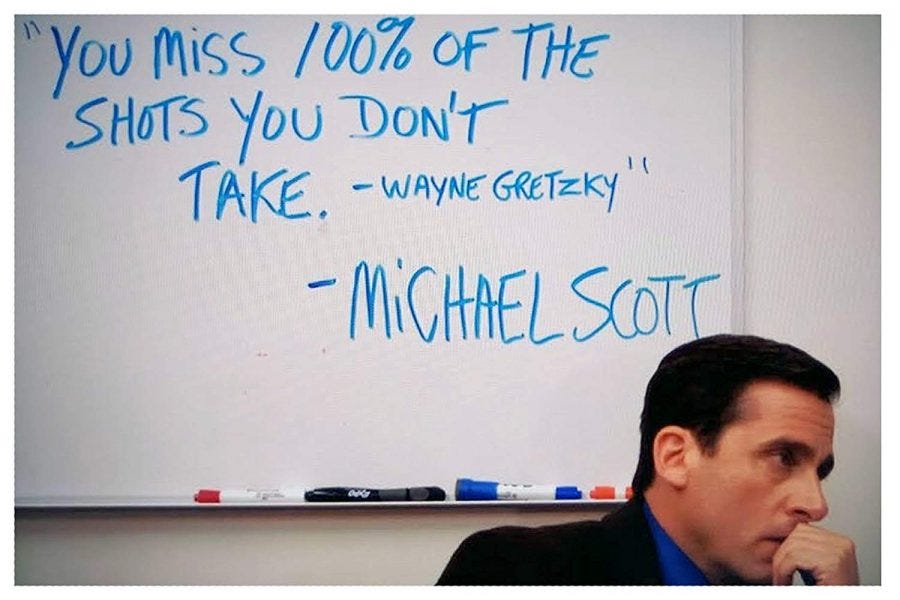
France’s ban on the importation of products treated with five pesticides used in the U.S. and South America is getting attention. Italy will align its levy on small parcels from non-EU countries with the EU policy. Mercedes rebuffed U.S. overtures to move its HQ from Germany to the U.S. As Michael Scott famously said, “You miss 100% of the shots you don’t take.”
News from the Rest of the World
- China: China upped purchases of Brazilian soybeans after it met its U.S. quota. Nvidia CEO Jensen Huang said China is still finalizing a license to import H200 chips. Chinese EV giant BYD wants to sell 1.3 million cars outside China this year. The WTO sided with China in its challenge of U.S. clean energy tax credits. USTR Jamieson Greer panned the decision. Rep. John Moolenaar (R-MI), who chairs the House Select Committee on the Chinese Communist Party, sent a letter to Ford regarding its plan to build data center batteries with Chinese company CATL.
- India: USTR Jamieson Greer said India “has a ways to go” on Russian oil imports, while noting “a lot of progress” on the issue. External Affairs Minister S. Jaishankar will be in the U.S. next week.
- Malaysia: The Malaysian government is planning a cost-benefit analysis of the U.S. trade deal while also warning lawmakers against terminating the deal.
- Panama: The country’s Supreme Court annulled the contract for Hong Kong’s CK Hutchison to run the ports at either end of the Panama Canal. Secretary of State Marco Rubio greeted the decision.
- Switzerland: Senate Finance Committee Ranking Member Ron Wyden (D-OR) sent a letter to USTR Jamieson Greer asking for more information on how it set the tariff rates on Switzerland, particularly after the business delegation visit.
- The UK: New UK Trade and Investment Envoy to the U.S. Varun Chandra met with Commerce Secretary Howard Lutnick in Davos.
Quick Hits
- The Commerce Department released procedures for submission for companies importing medium- and heavy-duty vehicles to determine U.S. content under USMCA
- The Treasury Department released its latest report on currency manipulation, adding Thailand to the watch list and noting ongoing consultations with Japan, Switzerland, Malaysia, Thailand, Korea, and Taiwan
- The Department of Health and Human Services released an advance notice of proposed rulemaking seeking comments on a new “Secure American Medical Supplies” that “could be earned by hospitals that demonstrate their commitment to domestic procurement”
- The Houthis said they were ready to resume strikes in the Red Sea
- A lawsuit was filed at the Court of International Trade challenging CBP’s interpretation of the calculation of steel content under Section 232 steel tariffs
- Politico examined how the Trump Administration could pivot to licenses under IEEPA
- The Trump Administration is moving away from price floors on critical minerals…or maybe they aren’t
- Rep. Vern Buchanan (R-FL), who serves as Vice Chair of the House Ways and Means Committee, announced he would retire at the end of the term
- Rep. Angie Craig (D-MN) introduced H.R. 7206, the Farm and Family Relief Act, which would (per a press release) terminate IEEPA tariffs and provide relief to farmers
- VW paused plans for an Audi factory in the U.S. as tariffs hit profits
- White House trade advisor Peter Navarro penned an op-ed in the Washington Times titled, “New Oklahoma aluminum smelter proves Trump tariffs work”
Tarif-Fone
Let me know if I missed anything. It’s not unpossible. IEEPA tariffs struck down by courts but in place pending appeal are italicized. There are lawsuits pending on some of the other IEEPA actions, but those have separate circumstances and arguments and may not be struck down themselves.
Trade Actions in Effect | ||||
As of | Who | What | Rate | Authority |
2/4/25 | China | 10% (20% from 3/4/25-11/10/25; 10% from 2/4/25-3/3/25) | ||
3/4/25 | Canada | 35% (25% from 3/4/25-7/31/25) | ||
3/4/25 | Mexico | 25% | ||
3/12/25 | All countries | 50%; UK at 25% (25% for all countries from 3/12/25-6/4/25) | ||
3/12/25 | All countries | 50%; UK at 25% (25% for all countries from 3/12/25-6/4/25; was 10% prior to 3/12/25) | ||
4/2/25 | Countries importing Venezuelan oil (currently none) | 25% | ||
4/3/25 | All countries | 25% | ||
4/4/25 | All countries | 25% | ||
4/5/25 | Countries not on this list (minus Canada, China, Cuba, North Korea, Russia, Belarus) | 10% | ||
4/9/25 | China | 10% (was 125% from 4/10/25-5/3/25; was 84% on 4/9/25) | ||
5/2/25 | China, Hong Kong | N/A | ||
5/3/25 | All countries | 25% | ||
6/23/25 | All countries | Tariffs on steel derivatives (mostly appliances) | 50% (25% for UK) | |
8/1/25 | All countries | 50% | ||
8/6/25 | Brazil | Additional tariff (plus exemptions effective November 13) | 40% | |
8/7/25 | ||||
8/18/25 | All countries | Tariffs on steel and aluminum derivatives | 50% (25% for UK) on steel or aluminum content; IEEPA rate applicable to country on non-steel or aluminum content | |
8/27/25 | India | 25% | ||
8/29/25 | All countries | N/A | ||
10/14/25 | All countries (minus EU, Japan, UK) | 10% or 25%, depending on product | ||
11/1/25 | All countries | 10% or 25%, depending on the product | ||
1/15/26 | All countries | Semiconductors and semiconductor manufacturing equipment used in certain applications | 25% | |
1/30/26 | Countries exporting oil to Cuba (currently none) | TBD | ||
Coming Attractions | ||||
Status | Who | What | Rate | Authority |
Effective 10/1/25(?) | All countries (probably) | 100% unless construction ongoing | ||
Due 10/28/25 | All countries | Inclusions process for Section 232 copper | 50% | |
Report due 12/27/25 (comments due 5/7/25) | All countries (probably) | TBD | ||
Report due 1/26/26 (comments due 6/3/25) | All countries (probably) | TBD | ||
Report due 3/28/26 (comments due 8/6/25) | All countries (probably) | TBD | ||
Report due 3/28/26 (comments due 8/6/25) | All countries (probably) | TBD | ||
Report due 5/10/26 (comments due 9/9/25) | All countries | TBD | ||
Report due 5/30/26 (comments due 10/17/25) | All countries | Personal Protective Equipment, Medical Consumables, and Medical Equipment, Including Devices | TBD | |
Report due 5/30/26 (comments due 10/17/25) | All countries | TBD | ||
Due 7/15/26 | Brazil | TBD | ||
Action due 10/24/26 (hearing 12/16/25) | China | TBD | ||
Suspended until 11/10/26 | China | Certain Section 301 China tariff exclusions | 7.5% or 25% | |
Suspended until 11/10/26 | Shipping companies | |||
Suspended until 11/10/26 | China | 100% | ||
Suspended until 11/10/26 | China | Reciprocal tariff | 34% | |
Effective 1/1/27 | Nicaragua | 10% (15% on 1/1/28) | ||
Effective 1/1/27 | All countries (minus EU, Japan, UK) | 10%, 30%, or 50% depending on product | ||
6/23/27 | China | TBD (announced at least 30 days in advance) | ||
TBD (no current deadline) | Canada | 25% | ||
TBD (no current deadline) | Mexico | 25% | ||
TBD | Mexico | 30% | IEEPA | |
TBD | All countries (probably) | 100% | TBD (maybe Section 232) | |
TBD | All countries (probably) | Inclusions process for timber and lumber | TBD | |
TBD | All countries (probably) | Inclusions process for truck parts | TBD | |
TBD | Countries doing business with Iran | TBD (probably all imports) | 25% | TBD (probably IEEPA) |
TBD | Canada | 50% | TBD | |